
Niacinamide is one of the most commonly used ingredients in skincare due to its versatility and wide range of benefits. Depending on the concentration, it can help with hydration, reducing imperfections and evening out the complexion.
Niacinamide is an ingredient that is often mentioned and used in cosmetic products, but did you know that different concentrations of this ingredient work differently? It is true that niacinamide acts as a humectant and has a beneficial effect on skin prone to imperfections, but the percentage in which it is present in a product is very important.
Niacinamide is particularly interesting because it can adapt to different skin needs, from dry and sensitive to oily and blemish-prone skin. This flexibility is exactly what makes it one of the most common ingredients in modern skincare formulations.
What is niacinamide and how does it work?
Niacinamide, or nicotinamide, is a water-soluble derivative of vitamin B, more commonly known as vitamin B3. In low concentrations (1–2%), it is a very effective hydrating agent, while in higher percentages (above 4%) it has been proven to act on post-inflammatory pigmentation by inhibiting melanin synthesis, successfully reducing sebum production and refining skin texture (visually minimizing the appearance of pores).
This makes it an ideal component in products for treating skin prone to mild to moderate acne, oily yet dehydrated skin, hyperpigmented skin (with leftover acne marks as well as UV damage spots), and skin prone to inflammatory conditions such as seborrheic dermatitis and psoriasis.
Niacinamide – what is it used for?
Niacinamide is used in various skincare routines because it can address multiple concerns at once.
It is most commonly used for:
- hydration and strengthening of the skin barrier
- reducing imperfections and regulating sebum
- reducing post-inflammatory marks
- evening out the complexion
- supporting sensitive and reactive skin
Due to its compatibility with other ingredients, niacinamide is often used as a base in routines that include active ingredients. It can help stabilize the skin and reduce potential irritation that may occur with stronger treatments.
Recent research has shown that niacinamide, at a concentration of at least 4%, is comparably effective in eliminating acne as the antibiotic clindamycin 1%, and in terms of brightening marks, it has achieved similar results at the same percentage compared to the problematic (but effective) hydroquinone 4%.
When applied topically, niacinamide is a safe and effective ingredient, ideal for those who want to treat problematic areas of the skin while also incorporating anti-age care. Due to its stability and good tolerability, niacinamide is one of the most commonly recommended ingredients in dermatological skincare.
Temporary redness may occur if niacinamide is layered with products that have a significantly lower pH, such as exfoliants and some vitamin C derivatives. However, this is not an allergic reaction, but an expected redness that occurs because, in an acidic pH environment (below pH 5), niacinamide begins to break down on the skin. For this reason, we recommend alternating niacinamide-based products and exfoliants between morning and evening, and not using them simultaneously or layering them. Our vitamin C serum contains a more stable form of this ingredient, sodium ascorbyl phosphate, formulated at a pH similar to our niacinamide product, so there is no negative interaction, making them suitable for combination to achieve optimal results on skin prone to uneven tone, marks and inflammation.
Niacinamide and skin types
Niacinamide is an ingredient that can be used across different skin types because it adapts to the skin’s needs.
- Oily skin → helps regulate sebum and reduce shine
- Dry skin → supports hydration and strengthens the skin barrier
- Sensitive skin → soothes and reduces reactivity
- Blemish-prone skin → helps reduce inflammation and clogged pores
How to choose a product with niacinamide?
Choosing a niacinamide product depends on your skin type and skincare goals.
- for hydration → lower concentrations (1–2%)
- for imperfections → higher concentrations (4%+)
- for sensitive skin → gentle formulations
It is important to choose a product that fits your routine to ensure consistent and long-term use.
When to introduce niacinamide into your routine?
Niacinamide can be introduced at any point in your routine, regardless of skin type or season.
It is recommended to:
- start with lower concentrations
- gradually increase frequency of use
- monitor your skin’s reaction
Due to its gentle nature, niacinamide is often the first active ingredient introduced into routines for those just starting targeted skincare.
Skintegra products containing niacinamide
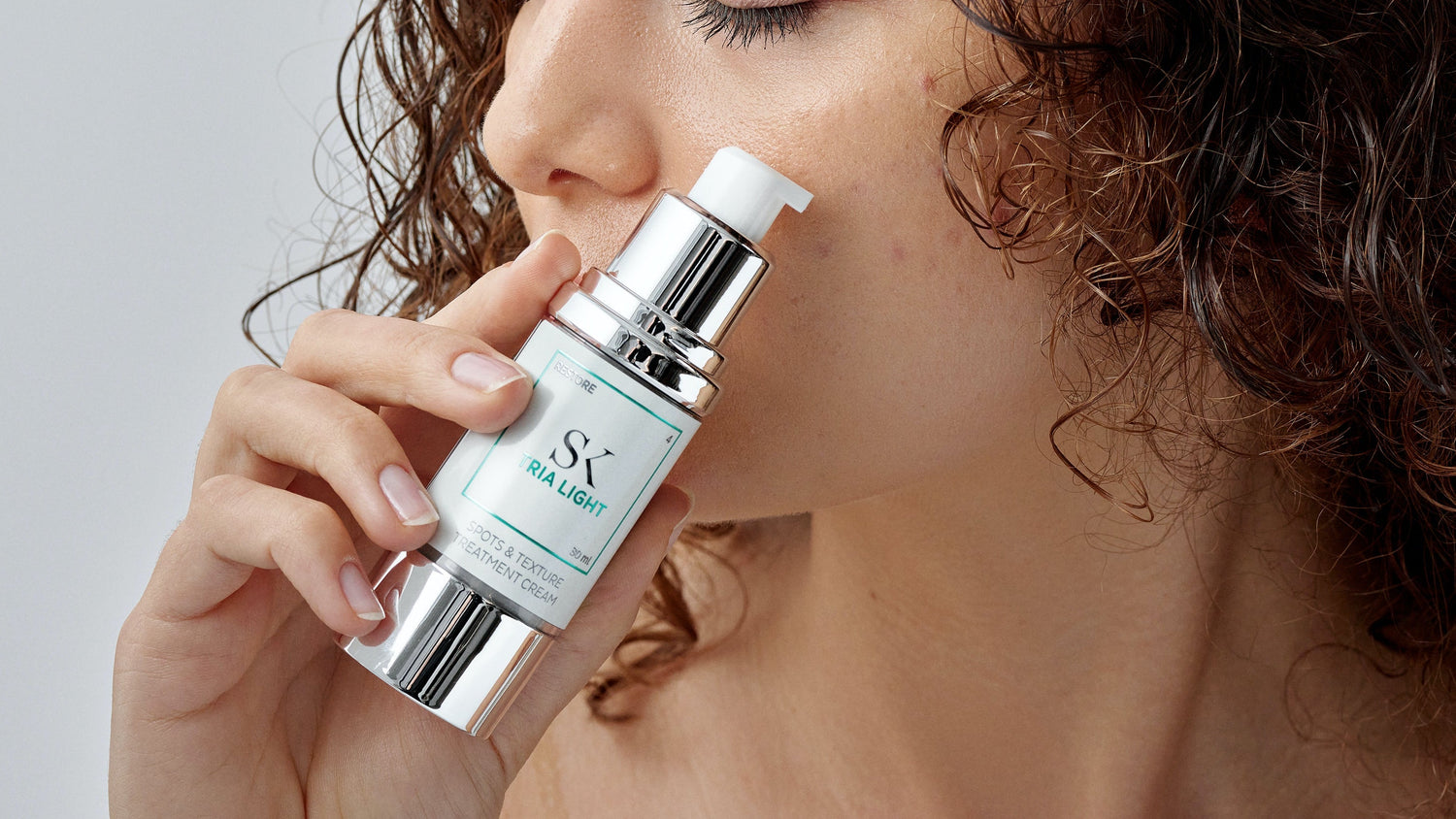
Tria Light: Treatment cream with 6% niacinamide for combination and oily skin prone to clogged pores and post-inflammatory marks.
Infrared: Concentrated serum for sensitive skin containing 2% niacinamide for enhanced hydration and strengthening of the skin barrier.
Hydra B: 1% niacinamide works synergistically with a carefully selected complex of humectants in this serum emulsion for intense, deep hydration.
Frequently asked questions about niacinamide
Is niacinamide good for acne?
Niacinamide helps regulate sebum production and has anti-inflammatory properties, which is why it is commonly used in skincare for blemish-prone skin.
Can niacinamide help with dark spots?
Niacinamide affects melanin production and can help reduce the visibility of hyperpigmentation and even out skin tone.
Is niacinamide suitable for sensitive skin?
In lower concentrations, niacinamide soothes the skin and helps strengthen the skin barrier.
Can niacinamide be used every day?
Yes, niacinamide is gentle enough for daily use and can be used both morning and evening.
How quickly does niacinamide work?
Results may be noticeable after a few weeks of regular use, while full effects appear over a longer period.
References
Forbat, E., Al-Niaimi, F. and Ali, F. R. (2017.), Use of nicotinamide in dermatology. Clinical and Experimental Dermatology, 42: 137–144.